

Itsukushima Shrine
Miyajima-cho, Hatsukaichi, Hiroshima Prefecture, Japan Shinto
UNESCO-listed sea shrine on sacred Miyajima, internationally famous for its offshore torii gate.
皇大神宮(内宮) · Naiku · Kotai Jingu · Inner Shrine of Ise Jingu
Japan’s most sacred Shinto sanctuary, dedicated to Amaterasu Omikami and central to the Ise pilgrimage tradition.
Sacred Place Overview
Identity, documented context and sacred significance.
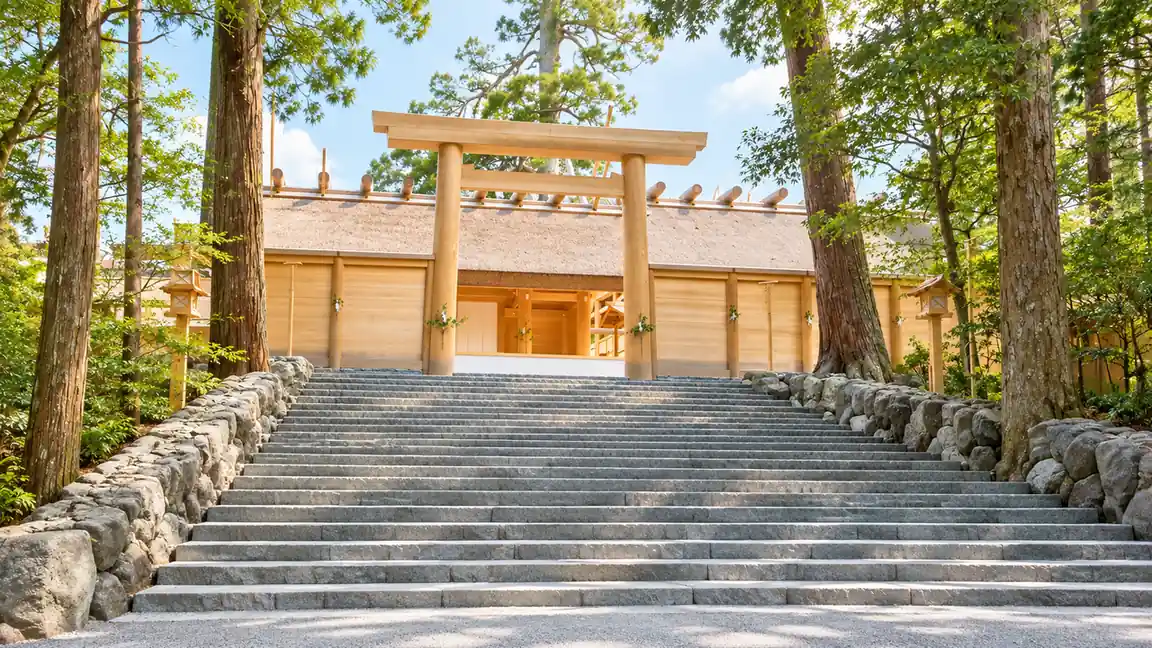
Ise Jingu’s Naiku, formally Kotaijingu, is the inner sanctuary of the Ise shrine complex in Ise, Mie Prefecture. It is dedicated to Amaterasu Omikami, the solar kami revered in Shinto and traditionally regarded as the ancestral kami of the Imperial family. The official shrine describes Naiku as the central sanctuary of Jingu and says that Amaterasu has been worshipped at Ise for about two millennia.
The innermost sacred palace contains the sacred mirror associated with Amaterasu in shrine tradition, but visitors worship from outside a series of enclosing fences and cannot enter the most restricted area. Naiku is approached across Uji Bridge and through a forested precinct in which ritual purity and orderly worship remain central.
Ise Jingu is also known for Shikinen Sengu, the cyclical renewal of major shrine buildings and sacred furnishings, a tradition that preserves ritual knowledge and traditional craftsmanship. More than 1,500 rituals are conducted annually across Jingu. Visitors should treat claims concerning divine revelation and the imperial regalia as matters of Shinto tradition rather than independently demonstrable history. Photography restrictions apply near the innermost sanctuary, and posted instructions should be followed.
A concise view of the place, tradition, location and heritage details available for this Sacred Place.
Religious tradition, dedication and sacred associations connected with this place.
Documented history, sacred narrative and editorial synthesis are kept visibly separate.
Naiku is the principal sanctuary dedicated to Amaterasu Omikami. The present religious complex preserves a long tradition of periodic rebuilding known as Shikinen Sengu.
Shinto tradition associates the sacred mirror Yata-no-Kagami with Amaterasu and the imperial regalia. This is a religious tradition, not a claim independently verified by historical method.
Significance: Widely regarded as the most sacred Shinto shrine complex in Japan and a major national pilgrimage destination.
Shinmei-zukuri · Nationally significant Shinto sacred complex
Austere shrine architecture in the Ise style, periodically renewed through the Shikinen Sengu rebuilding tradition.
Documented worship, observances and practices where available.
Practical access information and visitor guidance for this Sacred Place.
Facilities and accessibility information for planning a visit.
Road, rail, air and local-access information where documented.
Travel tips: Visit early for a quieter atmosphere|Check current access and festival information before travel
Crowds: Very busy at New Year and during major festivals.
Continue exploring places connected by tradition, geography, architecture, heritage or pilgrimage.
UNESCO-listed sea shrine on sacred Miyajima, internationally famous for its offshore torii gate.
One of the three Kumano Sanzan grand shrines and a central destination of the Kumano Kodo pilgrimage.
One of Japan’s oldest and most important Shinto shrines, associated with Okuninushi and traditions of divine gathering and matchmaking.
Tokyo’s major imperial Shinto shrine, set within a vast man-made forest beside Harajuku.
Found outdated or incorrect information? Send a factual correction for editorial review.
Transparency